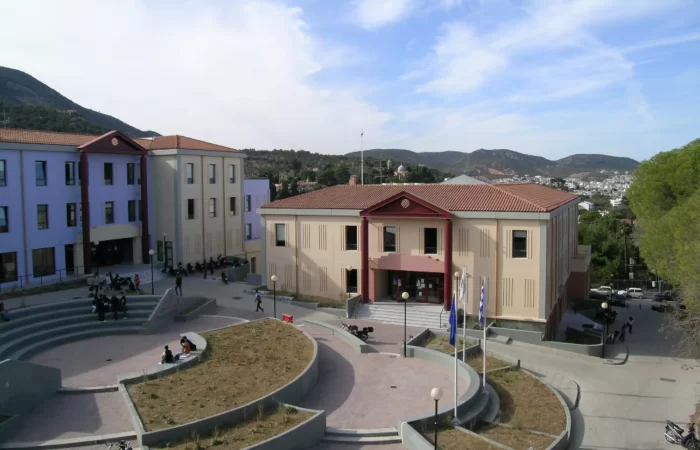
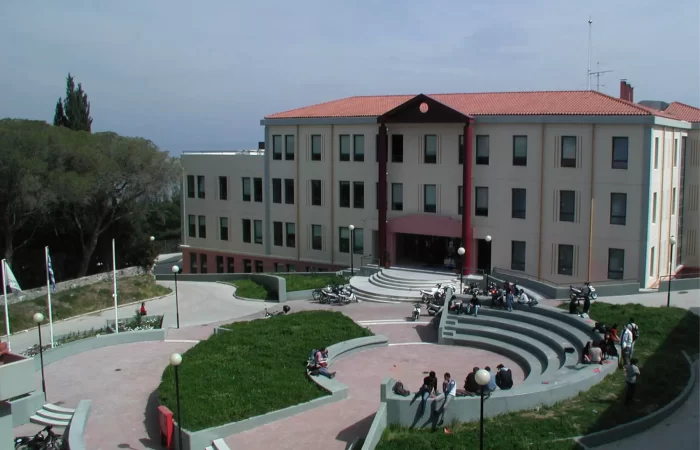
The Labour Geography Research Lab has been formed within the welcoming and scientifically engaging environment of the Department of Geography of the University of the Aegean. The core team, consisting of academics and researchers, started from the Economic Geography Lab of the same Department. A series of successful research grant applications led to the gradual formation of a team with a consistent research track record and interest in Labour Geography.
The Lab’s focus and expertise is related to the geographical context of Southern Europe. This part of the EU has been in the spotlight in recent years, as it has experienced two severe exogenous crises. For one, large fiscal deficits led states in the region to suffer from the Sovereign Debt Crisis that followed the Global Economic Crisis of 2008/09. A few years later, the Mediterranean Sea became the epicentre of large migration flows from Africa and the Middle East. As a result of conflicts and foreign interventions, environmental problems, and political instability in their home countries, large flows of people moved to Europe, with member-states in the area exhibiting a difficulty in receiving and integrating them. These crises made the countries of the region particularly vulnerable and reinforced the gap between the core and the periphery of the EU. Greece in particular was hit with marked severity.
The Lab attempts a multifaceted contribution to the field of Labour Geography. For one, it enriches the discipline’s approach by employing a mixed-methods methodological scheme, producing theoretically-informed and empirically- backed knowledge. Second, it addresses lesser-researched topics such as the underutilisation of labour, the impact of capital flows on the precarisation of employment, and the role of alternative economic practices in the reproduction of casual underemployment. Moreover, these issues are rather neglected in the context of Southern Europe; the Lab’s work therefore sheds light upon a geographic context that eludes the attention of research strands within the field of Labour Geography, while providing the data and knowledge to support decision-making.