


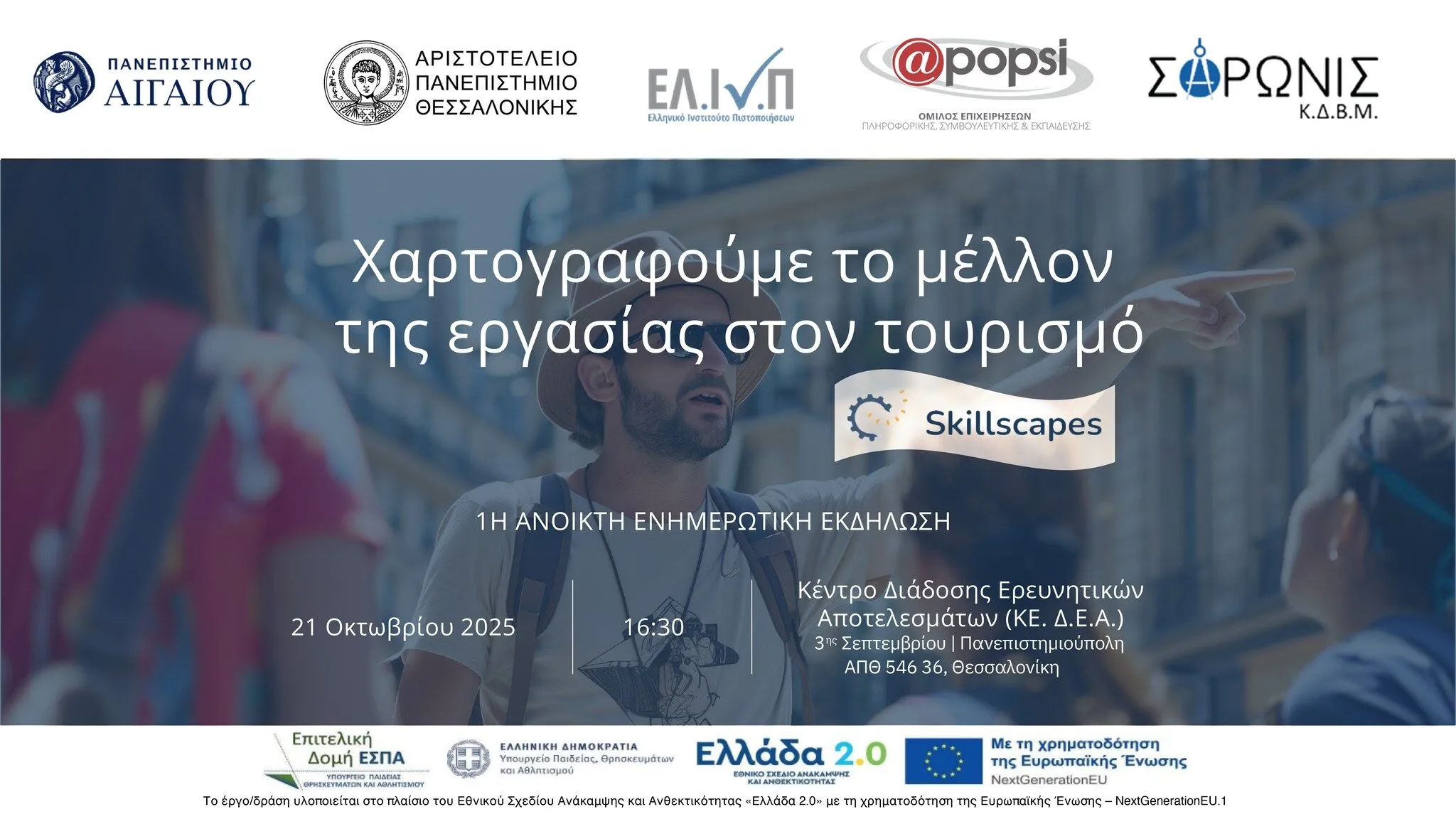
Το Skillscapes είναι ένα ερευνητικό πρόγραμμα που υλοποιείται στο πλαίσιο του Εθνικού Σχεδίου Ανάκαμψης και Ανθεκτικότητας «Ελλάδα 2.0», με χρηματοδότηση από την Ευρωπαϊκή Ένωση και το NextGenerationEU. Εστιάζει στη μελέτη των δεξιοτήτων και των μετασχηματισμών στην αγορά εργασίας του τουρισμού, συνδυάζοντας έρευνα, δεδομένα και καινοτόμες εφαρμογές.
Το εργαστήριο συντονίστηκε από τον καθηγητή Στέλιο Γκιάλη, επιστημονικά υπεύθυνο του ερευνητικού προγράμματος Skillscapes, και τον Δρ. Κωνσταντίνο Γούρζη, ερευνητικό συντονιστή του Πανεπιστημίου Αιγαίου.
Στο πρώτο μέρος του εργαστηρίου, ο κ. Γκιάλης παρουσίασε μια σύντομη επισκόπηση του κύριου αντικειμένου και στόχου του έργου και τόνισε τη σημασία της κατανόησης των μεταβολών στην αγορά εργασίας του τουρισμού, καθώς και την ανάγκη αξιοποίησης των ερευνητικών αποτελεσμάτων για τη λήψη τεκμηριωμένων αποφάσεων και την εφαρμογή τους στην πράξη.
Η επόμενη παρουσίαση, την οποία πραγματοποίησαν οι ερευνητές Δρ. Κώστας Γούρζης και Γιώργος Σύκας από το Πανεπιστήμιο Αιγαίου, παρουσίασε την πρόοδο του ερευνητικού σκέλους του έργου. Η ομιλία τους έδωσε έμφαση σε καινοτόμες θεωρητικές και εμπειρικές προσεγγίσεις της απασχόλησης στον τουρισμό και παρουσίασε μια λεπτομερή κατηγοριοποίηση των δεξιοτήτων που σχετίζονται με τα συγκεκριμένα τουριστικά επαγγέλματα που μελετώνται.
Η καθηγήτρια Αθηνά Βακάλη από το Αριστοτέλειο Πανεπιστήμιο Θεσσαλονίκης επικεντρώθηκε στις προοπτικές ανάπτυξης των Παρατηρητηρίων Δεξιοτήτων και Απασχόλησης. Επίσης, αναφέρθηκε σε κρίσιμα ζητήματα όπως η επισφαλής απασχόληση, η έλλειψη επικαιροποιημένων δεδομένων για τον τουριστικό τομέα, η αναντιστοιχία δεξιοτήτων και η αυξανόμενη ανάγκη ενίσχυσης των πράσινων δεξιοτήτων.
Η Μάγδα Πειστικού από το ΙΝΣΕΤΕ μίλησε για τις δεξιότητες του « τουρισμού του αύριο», παρουσιάζοντας το Tourism Skills Toolkit του ΙΝΣΕΤΕ και επισημαίνοντας τις πρωτοβουλίες του οργανισμού στον τομέα της επαγγελματικής κατάρτισης και της ενδυνάμωσης του ανθρώπινου δυναμικού στον κλάδο του τουρισμού.
Τέλος, ο Γιώργος Βούλκας και ο Ιωάννης Καραγιώργος από την ΑΠΟΨΗ Α.Ε. υπογράμμισαν τη σημασία της επαγγελματικής συμβουλευτικής στον τομέα του τουρισμού. Εστίασαν στον ρόλο της Τεχνητής Νοημοσύνης στη σύγχρονη επαγγελματική καθοδήγηση, στα εργαλεία και τις διαδικασίες που εμπλέκονται, καθώς και στις αναδυόμενες τάσεις που διαμορφώνουν το μέλλον της επαγγελματικής εξέλιξης στον τουρισμό.
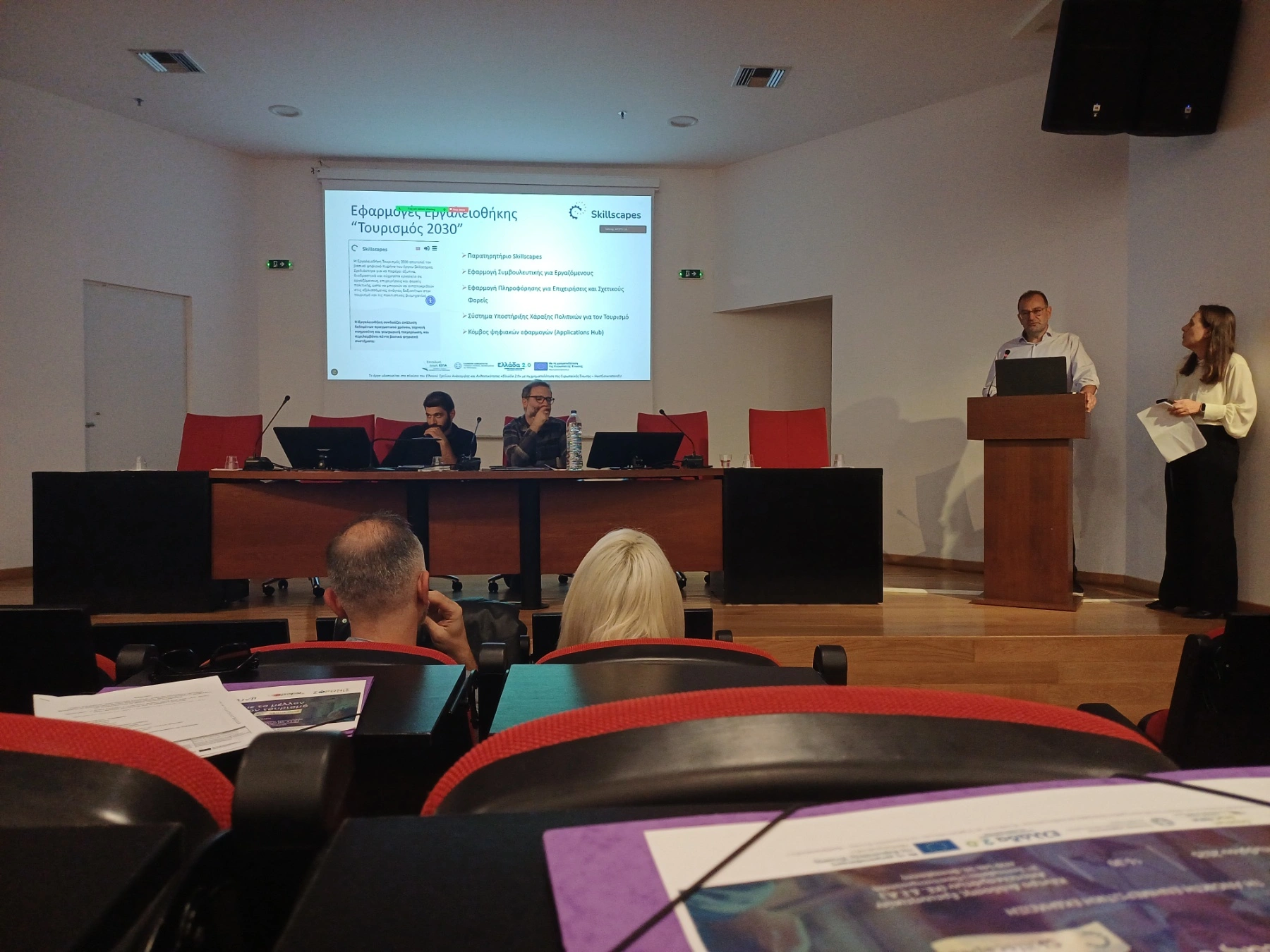
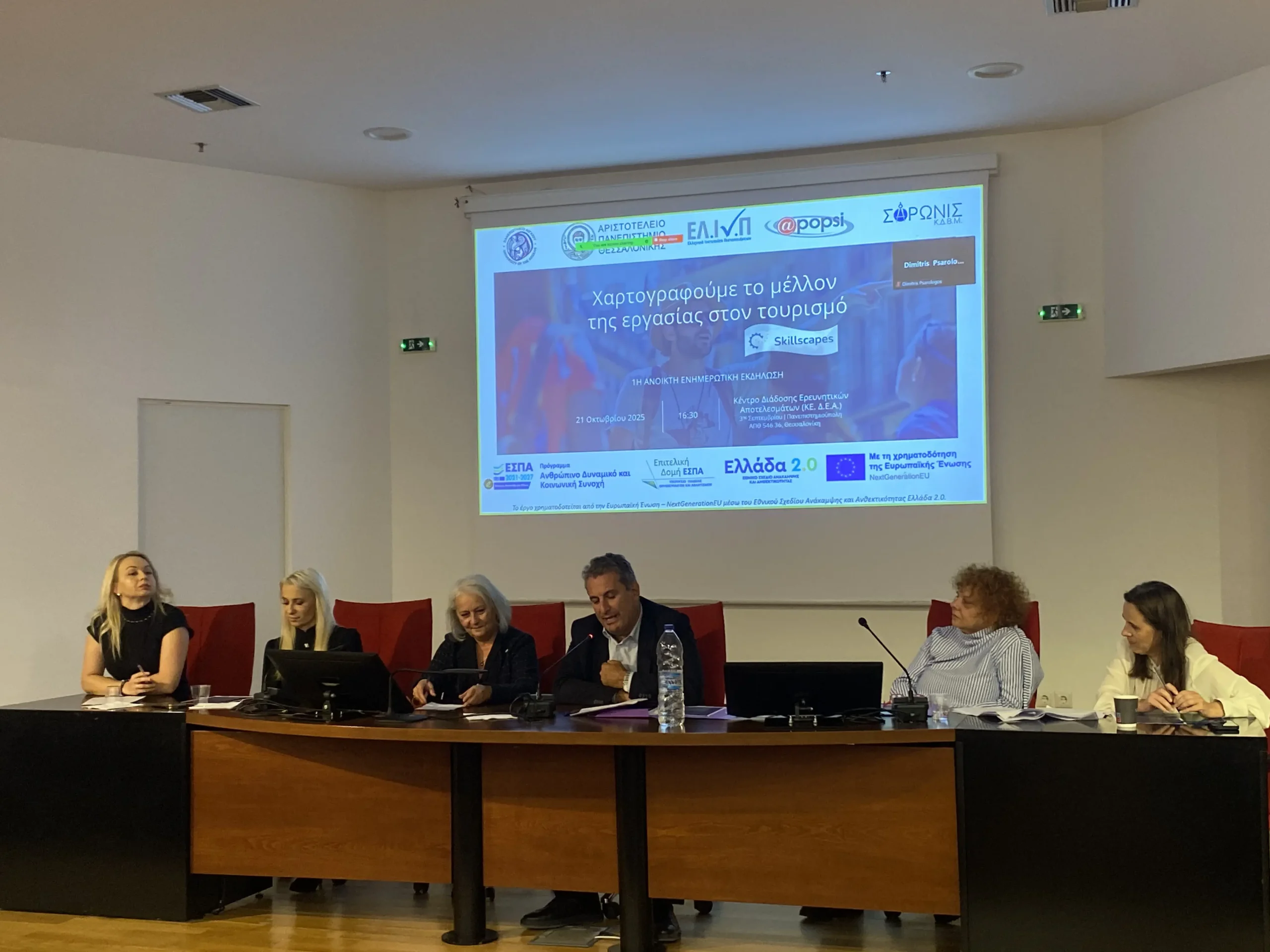
Στο δεύτερο μέρος του συνεδρίου πραγματοποιήθηκε μια ενδιαφέρουσα συζήτηση με θέμα «Η αγορά εργασίας στον τουρισμό και οι δεξιότητες: απόψεις και προσδοκίες των ενδιαφερόμενων μερών», υπό τη συντονιστική ευθύνη της κα Νεκταρία Μαραβά (ΑΠΟΨΗ Α.Ε.) και κα Ειρήνη Μπρεζετού (Πανεπιστήμιο Αιγαίου).
Στη συζήτηση συμμετείχαν κορυφαίοι εμπειρογνώμονες, μεταξύ των οποίων η Δρ. Μαρία Μορφουλάκη η Δρ. Γλυκερία Μυροβάλη (ΕΚΕΤΑ/ΙΜΕΤ), ο κ. Στέφανος Χατζημανώλης (Ένωση Ταξιδιωτικών Πρακτορείων Μακεδονίας-Θράκης), και την και η κα. Ξένη Γερνά (Υπουργείο Τουρισμού – Πειραματική Σχολή Ανώτερης Επαγγελματικής Κατάρτισης (ΣΑΕΚ) Τουρισμού Μακεδονίας).
Η Δρ. Μαρία Μορφουλάκη υπογράμμισε τη ισχυρή σχέση μεταξύ τουρισμού και μεταφορών, σημειώνοντας ότι «η βιώσιμη κινητικότητα αποτελεί αναπόσπαστο μέρος του βιώσιμου τουρισμού». Τόνισε ότι η ανάπτυξη βιώσιμων λύσεων μεταφορών απαιτεί νέες δεξιότητες για τους επαγγελματίες, όπως ψηφιακή παιδεία, περιβαλλοντική ευαισθητοποίηση και ικανότητα συνεργασίας σε διατομεακά δίκτυα. Η ενσωμάτωση αυτών των ικανοτήτων στην εκπαίδευση στον τομέα του τουρισμού, πρόσθεσε, είναι απαραίτητη για την οικοδόμηση ενός πιο πράσινου, πιο έξυπνου και πιο ανταγωνιστικού μοντέλου τουρισμού.
Κατά τη συζήτηση σχετικά με τη λειτουργία της Πειραματικής ΣΑΕΚ, η κα Ξένη Γερνά αναφέρθηκε στο πρόβλημα του ψηφιακού αναλφαβητισμού και της έλλειψης βασικών δεξιοτήτων μεταξύ των φοιτητών, επισημαίνοντας ότι πολλοί ξεκινούν τις σπουδές τους χωρίς επαρκή εξοικείωση με τα βασικά ψηφιακά εργαλεία. Οι παρατηρήσεις της ανέδειξαν τη σημασία της ενίσχυσης των βασικών δεξιοτήτων, προκειμένου να προετοιμαστούν οι μελλοντικοί επαγγελματίες για τις εξελισσόμενες απαιτήσεις του τουριστικού τομέα.
Ωστόσο, τόνισε ότι «ο τουρισμός απαιτεί όχι μόνο τεχνική και ψηφιακή εξειδίκευση, αλλά και ηθική, συνέπεια και βαθύ αίσθημα ευθύνης απέναντι στους επισκέπτες και τους συνεργάτες.» Υπογράμμισε τη σημασία της ενσωμάτωσης κοινωνικών δεξιοτήτων στα προγράμματα κατάρτισης και επανεκπαίδευσης του κλάδου. Ταυτόχρονα, ανέδειξε τον κρίσιμο ρόλο της δια βίου μάθησης και της συνεχούς επαγγελματικής ανάπτυξης, που επιτρέπουν στους εργαζόμενους να αποκτήσουν νέες και σχετικές δεξιότητες. Επισήμανε επίσης την ανάγκη ενίσχυσης της σύνδεσης μεταξύ των εκπαιδευτικών ιδρυμάτων και της αγοράς εργασίας, τονίζοντας την αξία ενός πειραματικού και ευέλικτου εκπαιδευτικού πλαισίου που μπορεί να προσαρμοστεί στις εξελισσόμενες απαιτήσεις του κλάδου.
Ο κ. Στέφανος Χατζημανώλης, στην ομιλία του, εστίασε στο υπάρχον χάσμα μεταξύ της εκπαίδευσης και των πραγματικών αναγκών της αγοράς. « Υπάρχει μια σαφής αποσύνδεση μεταξύ της εκπαίδευσης και των πραγματικών απαιτήσεων της βιομηχανίας», σημείωσε, προσθέτοντας ότι «αντιμετωπίζουμε έλλειψη μαθητειών, ευκαιριών πρακτικής κατάρτισης και πρακτικής εμπειρίας». Υπογράμμισε επίσης την ανάγκη καλλιέργειας τόσο κοινωνικών όσο και ψηφιακών δεξιοτήτων που συνδυάζουν τεχνική εξειδίκευση, τεχνολογική ικανότητα και ηθικό επαγγελματισμό.
Με τη σειρά της, η κα Μάγδα Πειστικού αναφέρθηκε στις αναδυόμενες δεξιότητες που διαμορφώνουν το μέλλον του τουρισμού, τονίζοντας τη σημασία της προσαρμοστικότητας σε έναν κλάδο που μεταβάλλεται συνεχώς. Ολοκληρώνοντας τη συζήτηση, υπενθύμισε ότι «ο τουρισμός είναι, πάνω απ' όλα, μια ανθρώπινη εμπειρία», και προέτρεψε τους επαγγελματίες να «ανακαλύψουν εκ νέου τις βασικές αξίες της φιλοξενίας και της συνειδητής επαγγελματικής ευθύνης».
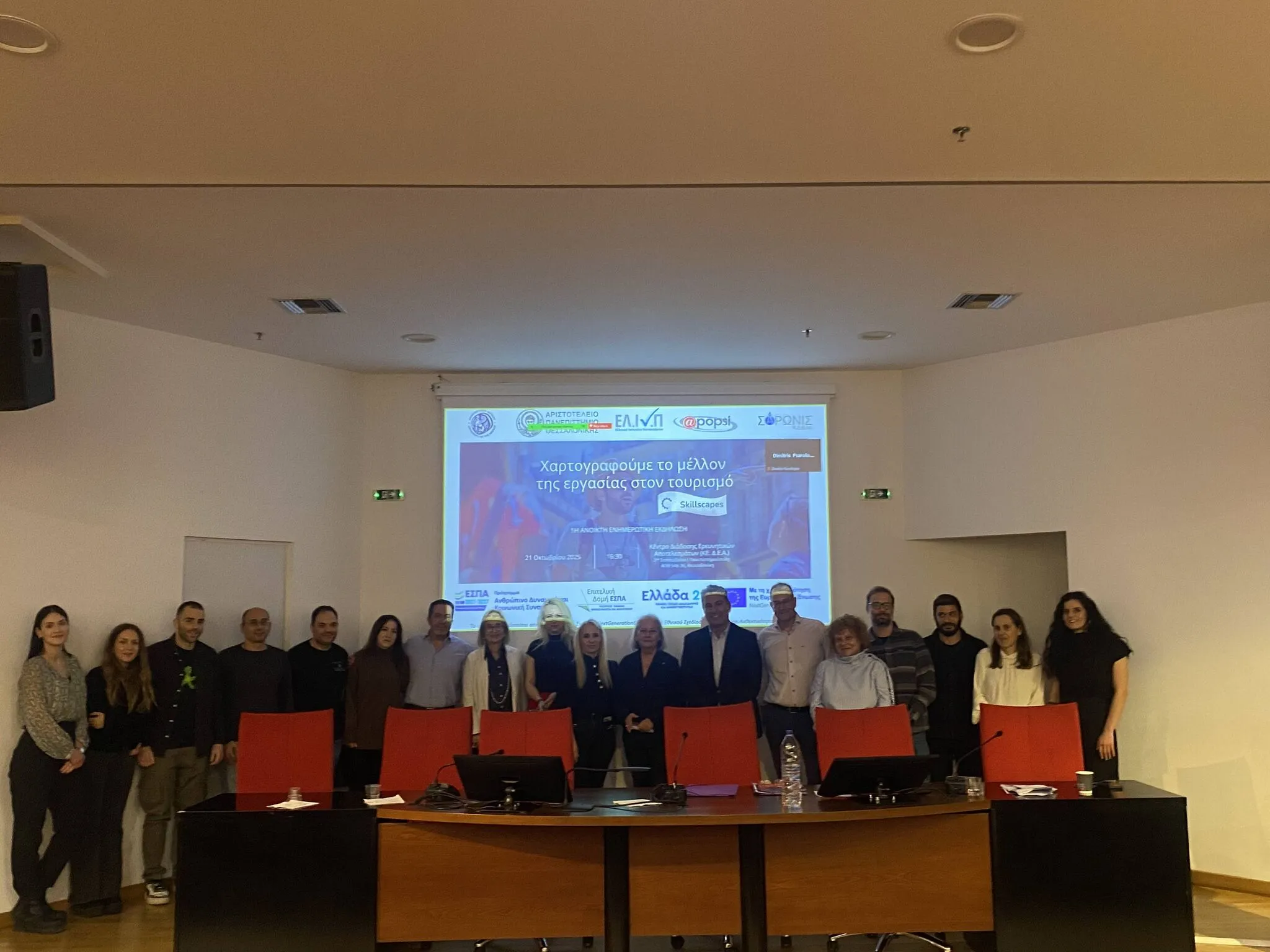
Το βασικό συμπέρασμα από όλες τις παρεμβάσεις ήταν η ανάγκη αναβάθμισης της εκπαίδευσης στον τομέα του τουρισμού μέσω της ενίσχυσης των ψηφιακών, κοινωνικών και πράσινων δεξιοτήτων, καθώς αυτές είναι απαραίτητες για την οικοδόμηση μιας βιώσιμης και περιβαλλοντικά υπεύθυνης οικονομίας. Οι συμμετέχοντες τόνισαν επίσης τη σημασία της γεφύρωσης του χάσματος μεταξύ εκπαίδευσης, έρευνας και αγοράς εργασίας.
Το εργαστήριο ολοκληρώθηκε με θετικό κλίμα, καθώς οι εμπλεκόμενοι φορείς εξέφρασαν τη δέσμευσή τους για συνεχή συνεργασία και διάλογο σχετικά με το μέλλον της απασχόλησης στον τομέα του τουρισμού.
Μπορείτε να μάθετε περισσότερα για το έργο Skillscapes στη διεύθυνση https://skillscapesproject.eu/ και ακολουθώντας τις σελίδες κοινωνικής δικτύωσης του έργου σε Facebook, LinkedIn, και YouTube.